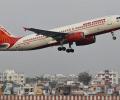
The timeline for disinvestment of Air India and Bharat Petroleum Corporation (BPCL) may be pushed by two to three months due to impact of the second Covid-19 wave. However, the government is confident of wrapping up the sale of the two companies by FY22 and meeting the disinvestment target of Rs 1.75 trillion. This will be achieved by sale of government stake in core and non-core public sector undertakings (PSUs).

According to government data, the Centre procured only 35,179 ventilators out of the 50,000 originally ordered.

The plan was to expand further, add more branches and also eventually become the third bank in India to start a wholly owned subsidiary after Singapore's DBS Bank and State Bank of Mauritius, but those plans never materialised due to lack of scale and rising non-performing assets in the country.

The fairy tale turnaround story has, however, taken a few knocks after a second wave of the pandemic has brought a series of default notices and has posed the toughest test for the 55-year old Singh to save the airline he founded and sold to the Marans only to assume control later.

Although such alerts are not compulsory for the banks, this may become the norm now if payments are missed even for a day.
The company will utilise this time to carry out maintenance work at its manufacturing plants.

The promoter-brothers, distant cousins to IndiGo's Rahul Bhatia, are eyeing Air India's ground handling subsidiary to augment their aviation services business even as they make a big play in EVs.

The car was expected to have a price tag of Rs 10 lakh and launch was slated for this June.

Known for its phones and emerging from nowhere in the segment, it might take on the scooter Goliaths.
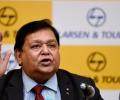
'Revival is happening slowly.' 'But that is, if the pandemic is controlled.'
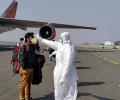
Within two weeks of many airlines deciding to roll back salary cuts encouraged by a steady increase in traffic flow, a second wave of coronavirus along with rules of compulsory RT-PCR test has hit forward bookings. The fears of last summer, when the pandemic had overturned all the wisdom of airline boardrooms, have returned to haunt the aviation industry. According to an official in the Ministry of Civil Aviation, flight occupancy is down to 60 per cent from 70 per cent in the first week of March. Airline lobby group IATA estimates that low cost airlines need to fly at 80 per cent occupancy to be profitable.

In a communication to the empowered committee on PLI recently, the Indian Cellular & Electronics Association (ICEA) has stated that except one player (Samsung), all the other eight players (which include vendors of Apple Inc) selected under the scheme were facing numerous challenges in fulfilling the qualification criteria.

For development finance institution to succeed now, the government must stand like a rock behind it and be patient.
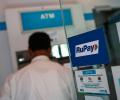
RuPay is working on how to increase offers to customers. It is also focused on technology innovation in the card payment system.

As a tech services company, Ola has never been in hardcore manufacturing. And unlike in ride hailing, which is a two-player market (Uber is the only other competitor), in two-wheelers it faces many entrenched players. But most of all, rivals say Ola's targets are out of sync with most, even ambitious, projections.

Disney-Star generated advertising revenue of over Rs 27 billion for IPL 2020.

The ministry of corporate affairs (MCA) has launched a probe into the books of Edelweiss Asset Reconstruction Company (EARC) following allegations by a whistleblower of fund diversion and irregularities. The whistleblower, Paras Kuhad, a former additional solicitor general of India, had written to the Prime Minister's Office and the Reserve Bank of India (RBI). Kuhad has alleged that Edelweiss Group and Caisse de depot et placement du Qubec (CDPQ), a Canadian institutional investor, which hold stakes in the ARC, diverted funds and did not adhere to norms while making investments in EARC's instruments. Sources have indicated that a probe has been initiated, but the MCA did not comment on the issue.

Italy may be the home of premium buffalo mozzarella cheese, but India could soon give the country a run for its money in this regard. India's largest dairy cooperative, Amul, has submitted a plan to the government, aiming to turn the country into a global hub for the export of mozzarella cheese made from buffalo milk, which is sold at a hefty premium around the world. Mozzarella cheese is one of the products identified by the government for support under its Rs 10,900 crore production-linked incentive scheme (PLI), to give a massive push to food processing exports as well as to build Indian food brands.
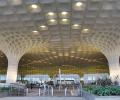
Adani Airports is planning to centre its airport business around Mumbai and Ahmedabad by developing them as gateway airports, feeding them with traffic from other airports in the company's portfolio. The Ahmedabad-based conglomerate - with investments in logistics, transportation, utilities and energy - intends to spend Rs 35,000 crore in the airport business in the next five years. This forms the bulk of the conglomerate's total capex of Rs 50,000 crore. According to a presentation given by the company in an investor call with Bank of America, gateway airports of Mumbai and Ahmedabad will be connected with the feeder airports of Lucknow, Guwahati, Trivandrum, Jaipur and Mangalore.
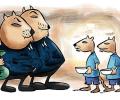
Individuals flew the flag for philanthropy in FY20, escalating their contribution significantly in comparison with company and foreign fund donations, according to the Dasra/Bain & Co India Philanthropy Report of 2021. Funding by individual philanthropists went up by 42 per cent from Rs 21,000 crore in FY19 to Rs 30,000 crore in FY20.
 © 2026 Rediff.com - Investor Information - Advertise with us - Disclaimer - Privacy Policy - Sitemap - Feedback - About us - Terms of use - Grievances